BLOG
Gas Safety & Compliance for Commercial Laundry Equipment
Gas Compliance Customer Guide
What operators need to know, and why ongoing checks matter
Gas safety for commercial laundry equipment is essential wherever gas-heated tumble dryers or finishing equipment are used. Although an installation may be compliant when it is commissioned, safety must continue to be considered throughout the equipment's working life.
Over time, changes to a building, its ventilation, ducting or room layout can introduce risks that are not immediately obvious. Therefore, this guide explains why ongoing checks matter, how a site can drift into non-compliance and how concerns can be identified and managed in practice.
Contact UsWhy gas safety for commercial laundry equipment matters
Because gas-heated laundry equipment moves large volumes of air for both combustion and drying, several factors must work together to maintain safe operation. These include:
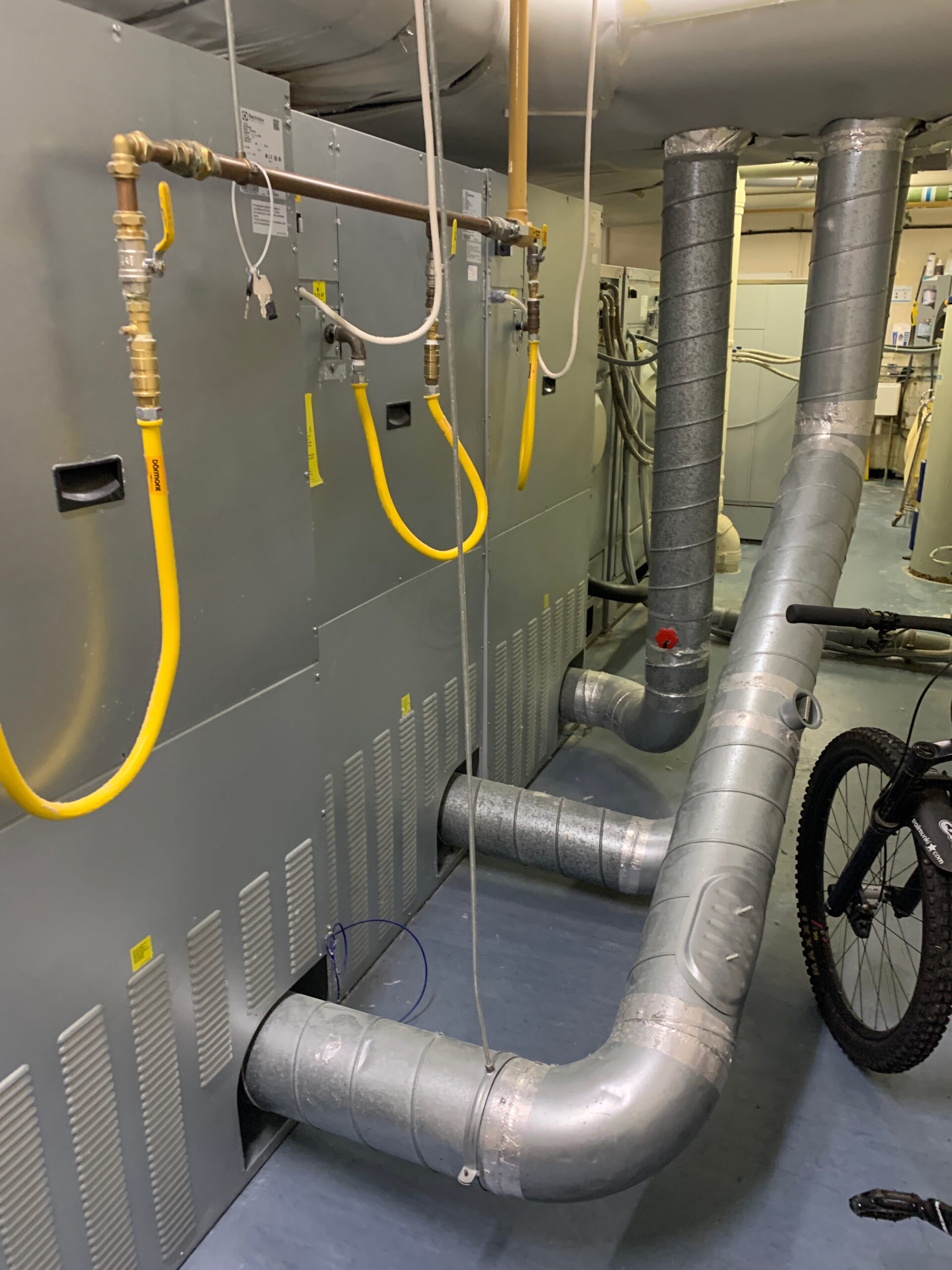
- Exhaust ducting design and termination
- Adequate permanent ventilation and make-up air
- Room layout and airflow paths
- Clear access to isolation and emergency controls
However, if any of these elements change, even unintentionally, previously compliant equipment can become unsafe. For that reason, gas safety should be reviewed at installation and then reassessed throughout the life of the machine.
Why sites can drift into non-compliance over time
In our experience, gas safety issues are rarely caused by deliberate neglect. More commonly, they arise because sites and buildings evolve over time.
For example, a site may experience the following changes:
- Windows, doors or vents being replaced or sealed
- Ventilation routes being blocked or reduced
- Exhaust ducting being modified, extended or re-routed
- Additional extract systems affecting airflow balance
- Equipment being moved or replaced without a full installation review
Because these changes often happen gradually, their effect on gas safety may not be obvious to operators or facilities teams. Consequently, each review should consider the installation as it exists today rather than relying only on its original design.
Common gas safety considerations for commercial tumble dryers
Although every installation is different, the following areas require particular attention:
Exhaust termination
First, exhaust outlets must prevent products of combustion from re-entering the building. In particular, safe clearances from windows, doors, vents and air intakes must be maintained whenever the building layout changes.
Ventilation and make-up air
Secondly, gas-heated dryers require adequate permanent make-up air. Without it, airflow may become restricted, which can cause poor performance, overheating or unsafe combustion conditions.
Ducting condition and lint control
Similarly, lint accumulation affects both performance and safety. Therefore, ducting should be suitable, accessible for inspection and kept clean so that airflow remains unrestricted.
Gas isolation and emergency access
Finally, isolation valves must be clearly identifiable, accessible and operable in an emergency. In addition, staff should not need to move equipment or use tools to reach them.
Importantly, previous sign-off should not be relied upon where site conditions have changed. Instead, each visit provides an opportunity to confirm that an installation remains safe and compliant in its current form.
Annual gas safety checks for commercial laundry equipment
In practice, gas safety should be reviewed at several key stages, including:
- Annual servicing or inspections
- Planned preventative maintenance visits
- Breakdown or repair attendance
- Pre-replacement or upgrade assessments
What happens if a safety issue is identified?
If a potential gas safety or compliance issue is identified, safety must come first.
Accordingly, the findings should be:
- Explained clearly and calmly
- Documented accurately
- Discussed with a focus on resolution, not blame
In some cases, remedial work may be required before the equipment can continue operating safely. Where this applies, however, the available options and next steps should be explained clearly so that operators can make informed decisions.
A supportive, non-judgemental approach
At times, gas safety can be a sensitive subject, especially when concerns relate to historic installations or changes made by third parties.
For this reason, a professional approach should focus on the following:
- Identifying risks early
- Explaining requirements in plain language
- Avoiding blame or criticism
- Working collaboratively to achieve compliance
Ultimately, this approach protects people, equipment and operations while supporting practical and proportionate solutions.
How this fits into wider laundry operations
More broadly, ongoing gas safety forms part of a reliable and compliant laundry operation. Moreover, regular servicing, planned maintenance and early reviews of site changes help to:
- Reduce risk
- Avoid disruption
- Support consistent performance
- Inform future replacement or upgrade decisions
As a final point, understanding gas safety requirements at an early stage can prevent delays and complications when new equipment is specified or installed.
Need advice or reassurance?
If you operate gas-heated commercial laundry equipment and need guidance on servicing, inspections or compliance, our team can explain what applies to your site. Above all, we aim to provide advice that is informed, proportionate and based on your specific environment.
Contact UsServices & Support
Product advice, installation and support
From product selection through to installation, servicing and long-term support, a&f helps organisations choose equipment that fits their site, workload, users and operating requirements. In addition, we consider how each solution will perform throughout its working life.
Support beyond the product
We supply, install and support professional laundry and dishwashing equipment. As a result, our guidance considers performance, reliability, efficiency and long-term value rather than the initial purchase alone.

Machine Repairs
When equipment develops a fault, our engineers provide repair support for professional washers, dryers, dishwashers and associated equipment used across commercial and specialist environments.

Sales & Installation
Before installation, we select equipment around the site, workload, users, infrastructure and long-term operating costs. Therefore, the proposed solution reflects the complete operation rather than the machine alone.

Annual Servicing & Inspections
Regular servicing and inspections help keep equipment running reliably. In addition, planned visits can reduce avoidable downtime and support long-term performance.

Service Contracts
For organisations that rely on professional equipment every day, service contracts provide ongoing support and a more structured approach to maintenance.

Machine Rentals
Alternatively, rental options provide a supported equipment solution for sites that do not wish to purchase machinery outright.

Laundry Analysis & Design
When a laundry room or service area is being reviewed, practical advice can improve layout, workflow, utilities and equipment selection.
Not sure where to start?
If you are unsure where to begin, a free site survey is usually the best first step when choosing professional laundry or dishwashing equipment for your site.
- Check the room, services, access, workflow and usage
- Compare suitable washing, drying, dishwashing and finishing options
- Avoid over-specifying or choosing equipment that does not fit the operation